The breed gallery
Stabyhoun
The Stabyhoun is the best-kept secret of the Dutch dog world: a Frisian farm breed that for centuries did everything a farm required — hunting mole and polecat, keeping watch, and lying with the family at the end of the day.
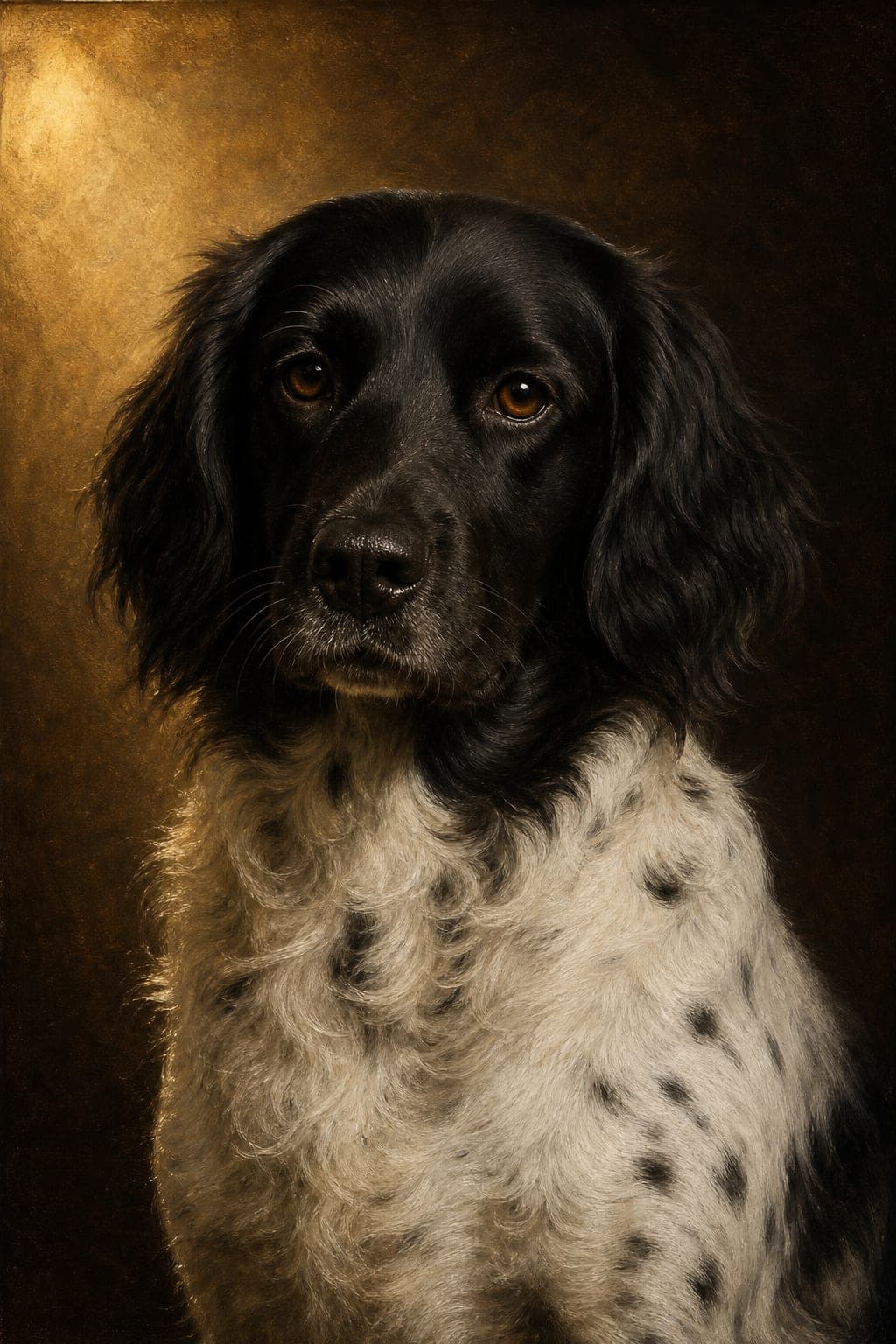
For a portraitist the Stabyhoun is a relief: black on white, semi-long feathering and a head that regards the viewer calmly without asking for anything.
- Origin
- Friesland, the Netherlands — an old farm breed, recognised in 1942
- Coat
- semi-long and sleek, with feathering on chest, hindquarters and tail
- Colours
- black and white; less often brown and white or orange and white, often ticked
- Height
- males roughly 53 centimetres; females roughly 50 centimetres
- Life expectancy
- roughly 13 to 14 years
- Character
- gentle, affectionate and calm indoors — outdoors a hunter
Character
The Stabyhoun is calm itself indoors and a gundog outside. In the house he asks for little more than company; he lies where the family is and seldom raises his voice. Outdoors the nose engages, and then it becomes clear how much gundog is still in him.
The breed is sensitive to the tone in which it is addressed. A hard hand works against you; with patience and clarity a Stabyhoun learns quickly and gladly.
Appearance and coat
The coat is semi-long and sleek, with feathering on chest, hindquarters and tail, and keeps out dirt and water remarkably well. Black and white is the best-known combination; brown and white is less common and orange and white is rare. Many Stabyhouns also carry ticking in the white.
Black on white, with feathering for handwriting — a Stabyhoun draws himself in two colours.
The head is clean-lined with a moderate stop, the eyes dark and round with a soft expression, and the ears hang along the cheeks with a characteristic fall of coat: long at the set, shorter towards the tip.
Care
A weekly brushing suffices; trimming is unnecessary, and mud falls out of its own accord once dry. Exercise and nose work matter more. Anyone looking for a puppy is wise to consult the breed club — with a rare breed, a careful pairing of parent dogs is no formality.
History
On Frisian farms the Stabyhoun was for centuries the dog for everything: he caught moles and polecats, whose skins brought in money, kept vermin out of the barn and retrieved what the farmer shot. Only in 1942 was the breed officially recognised, together with the related Wetterhoun; crossing the two has been forbidden ever since.
The portrait
Your Stabyhoun as an art portrait
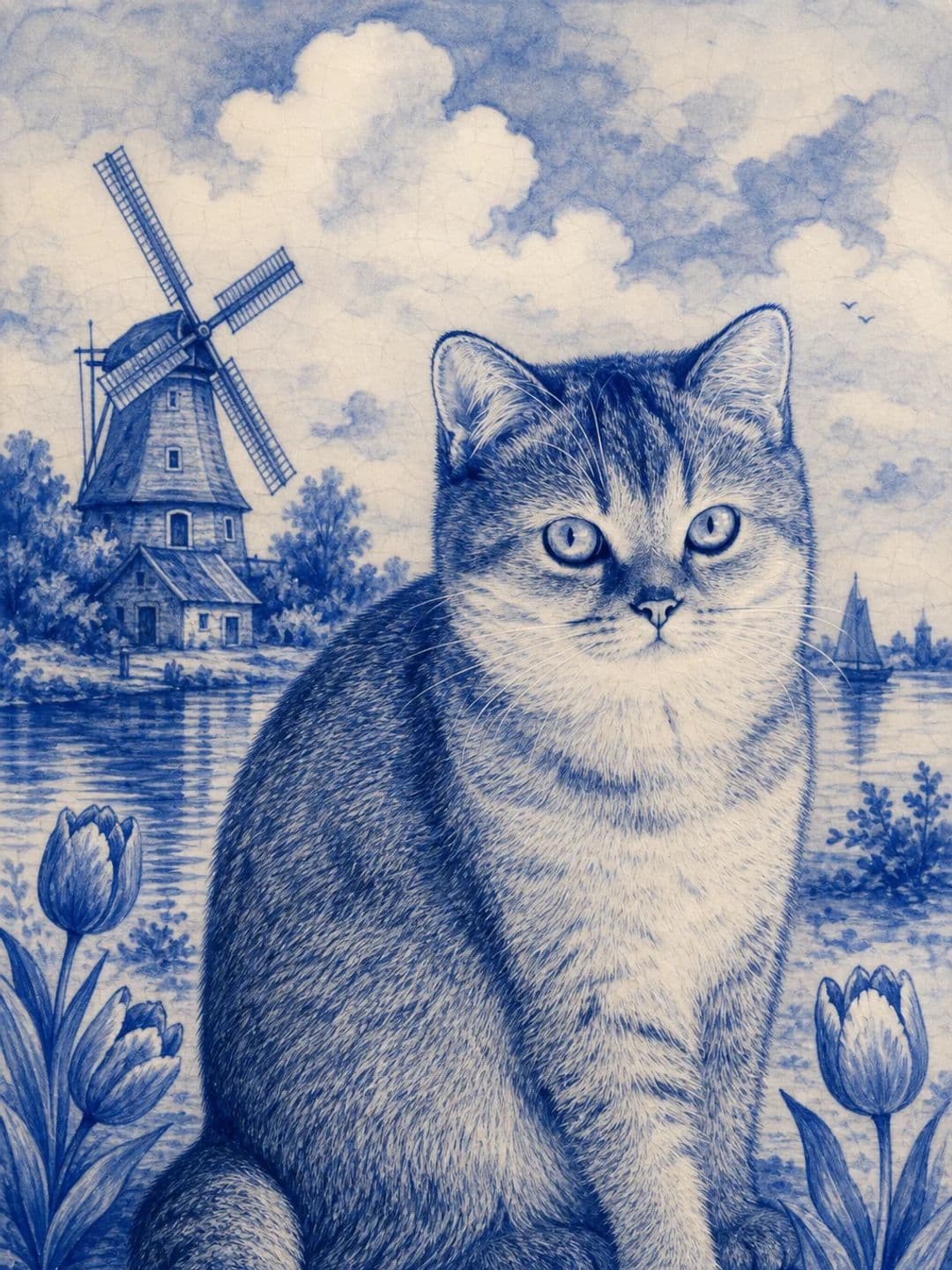
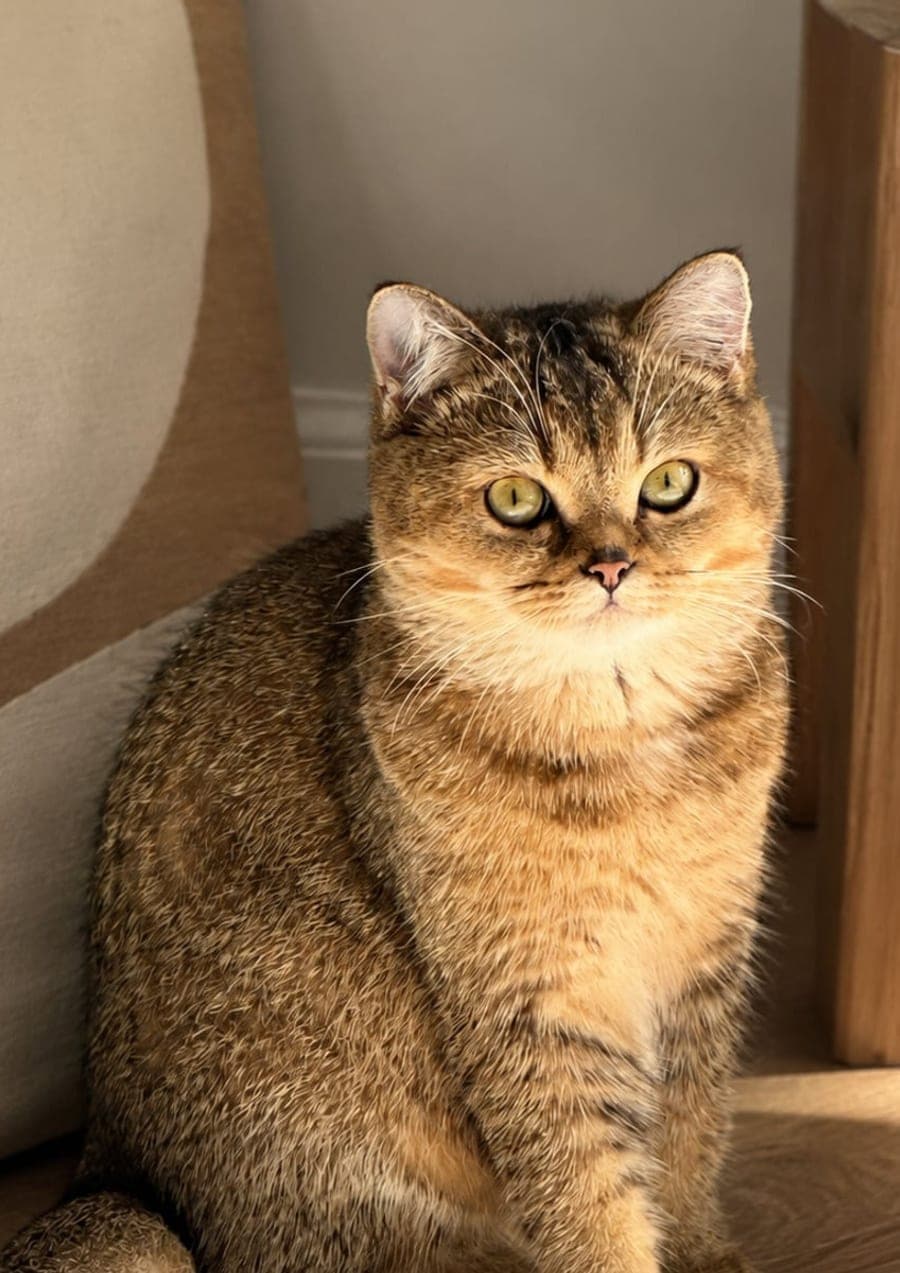
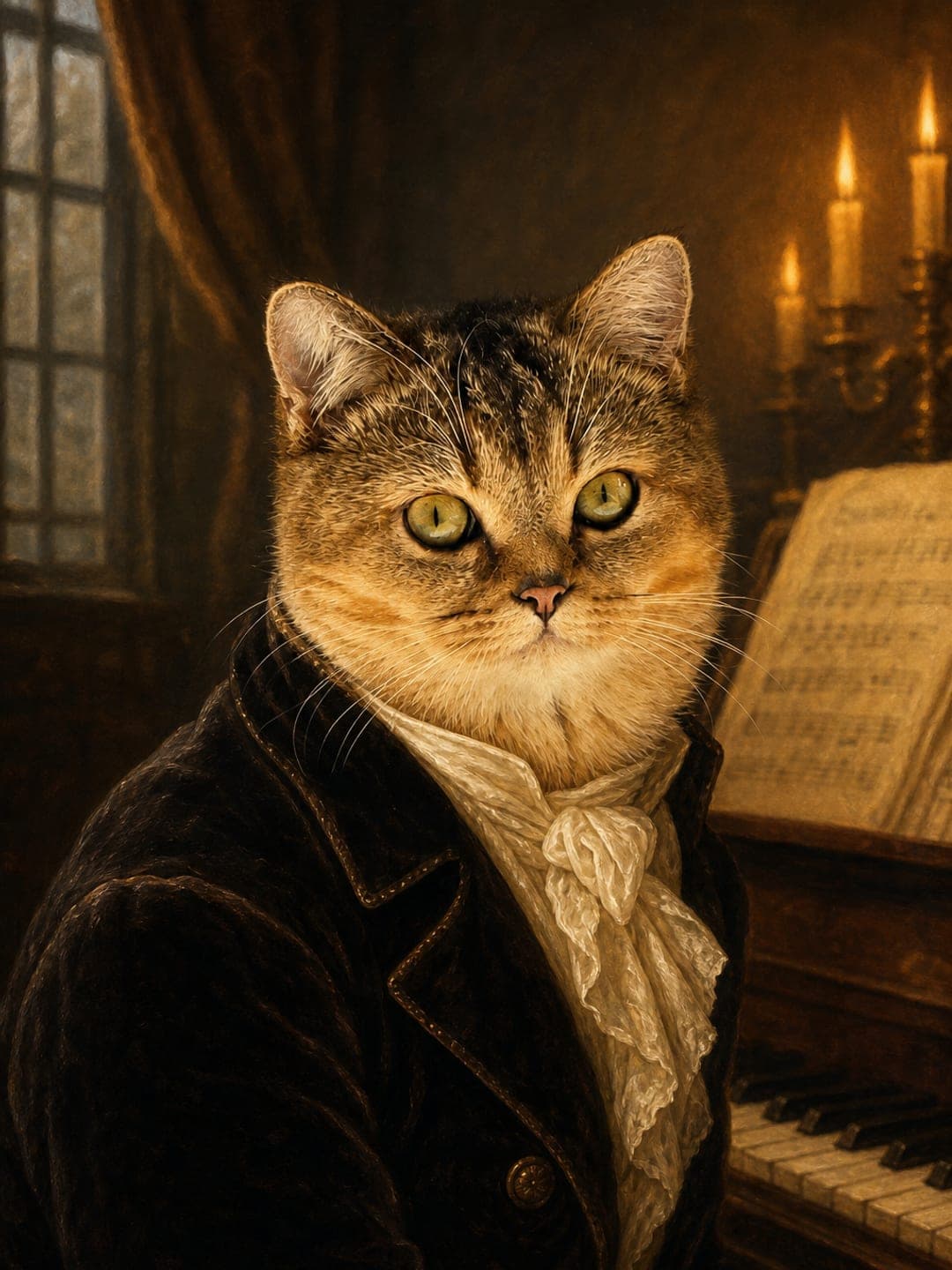
The Stabyhoun is a portrait in two colours: the black must stay deep and the white must not go empty. Styles that work with ink, glaze or subdued light do him the most justice. Photograph in overcast daylight — that keeps both colours together.