The breed gallery
Cocker Spaniel
The English Cocker Spaniel owes his name to his work: flushing woodcock. Out of the old British spaniels the smallest, quickest variant was bred apart in the nineteenth century, and recognised as a breed of its own in 1893.
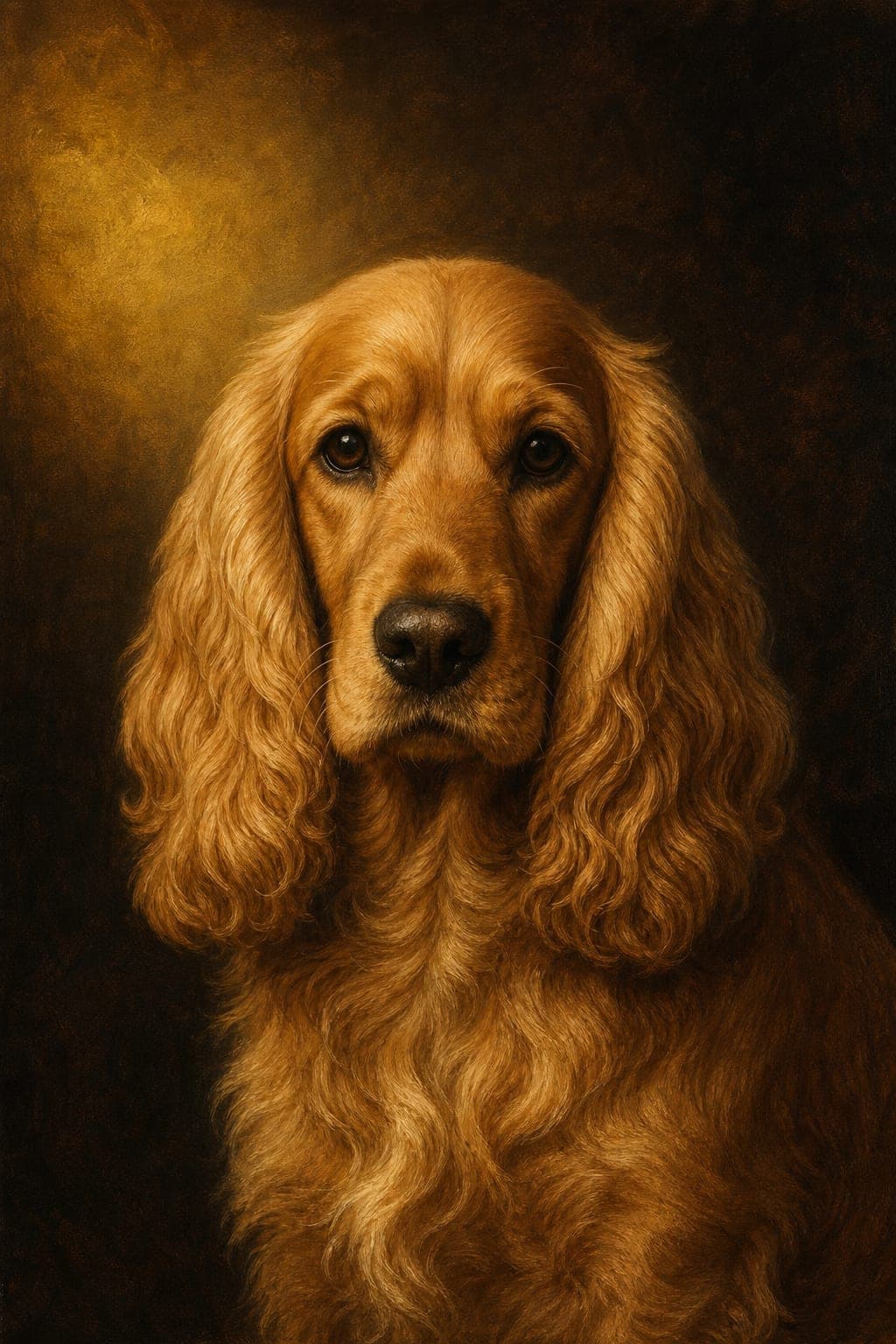
For a portraitist the Cocker is a study in fall: the ears hang long and heavily feathered along the head and make the finest line a dog has to offer.

- Origin
- England — a spaniel for woodcock; recognised as a breed in 1893
- Coat
- silken and flat, with rich feathering on ears, chest, legs and belly
- Colours
- solid black, red, golden or liver, alongside the particolour and roan varieties
- Weight
- roughly 12 to 15 kilos
- Life expectancy
- roughly 12 to 15 years
- Character
- merry, affectionate and willing — the merry cocker of the standard
Character
The Cocker is a dog who enjoys it: the breed is known for the ever-moving tail and an infectious enthusiasm that the standard itself calls merry. He attaches himself strongly, follows through the house and gladly joins in.
Beneath that cheerful surface sits a gundog with a nose. A Cocker who is not allowed to search searches anyway — in the hedge, in the kitchen, in the bin. Scent games are not entertainment for this breed but care.
Appearance and coat
The coat lies flat and silken over the body and runs out into rich feathering on ears, chest, forelegs and belly. The range of colours is wide: solid black, red, golden and liver, and beside them the particolour and roan varieties, in which the white is shot through with fine coloured hairs.
A Cocker’s ears fall like curtain fabric; paint them well and the portrait is already finished.
The head is noble with a clearly chiselled skull, the eyes dark and large with the soft expression the breed is known for, and the ears set low, long and heavily feathered.
Care
This breed asks for real work: brushing two or three times a week and trimming several times a year, or the feathering mats. The ears deserve a weekly check — long, low-set and hairy, they hold moisture and dirt. And mind the weight; a Cocker begs with conviction.
History
Spaniels have been described in British sporting literature for centuries, but only in the nineteenth century were they bred apart by size and work: the larger springer spaniel and the smaller cocker. The recognition of 1893 fixed the distinction; the dog Obo is regarded as the founder of the modern breed.
The portrait
Your Cocker Spaniel as an art portrait
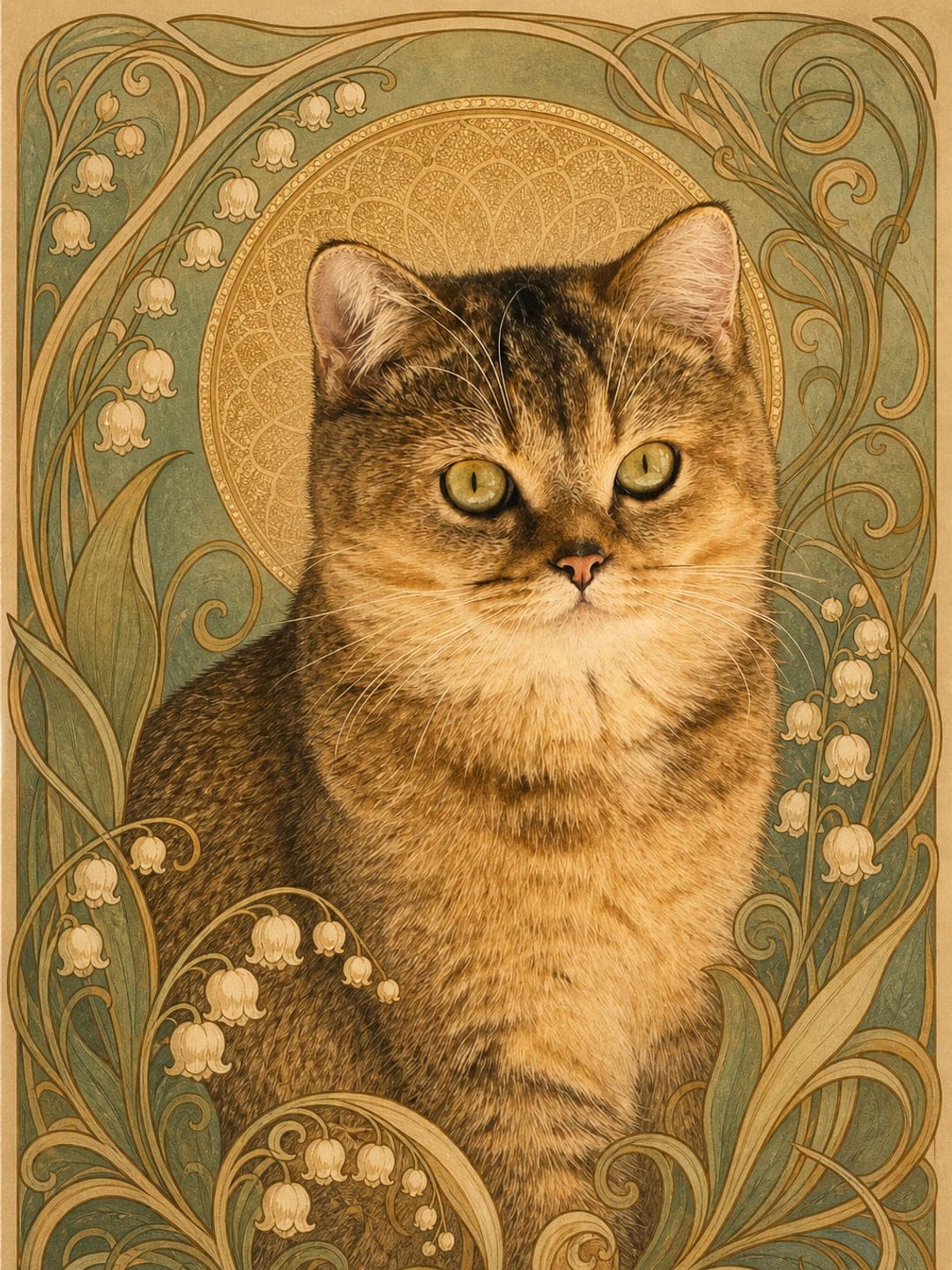
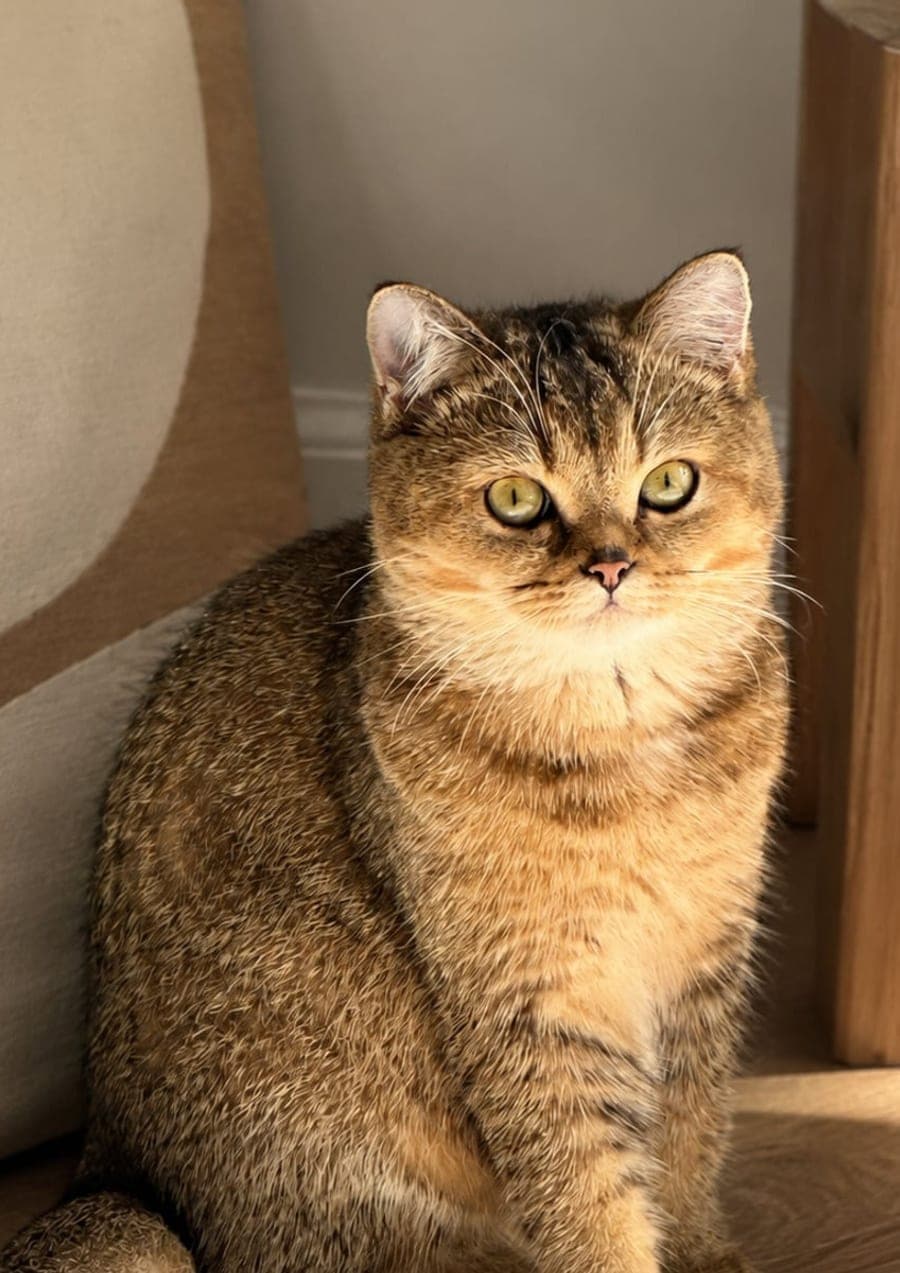
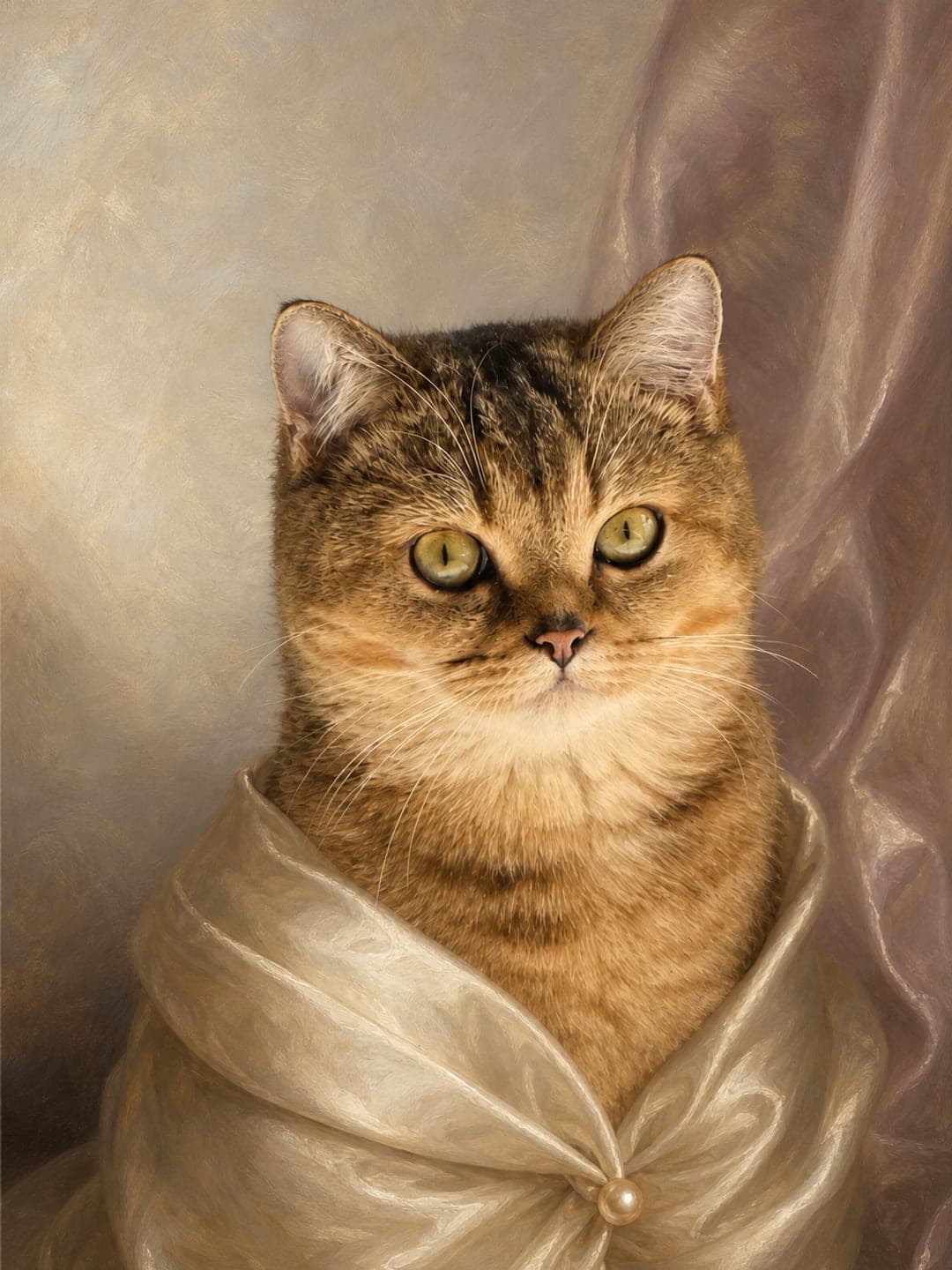
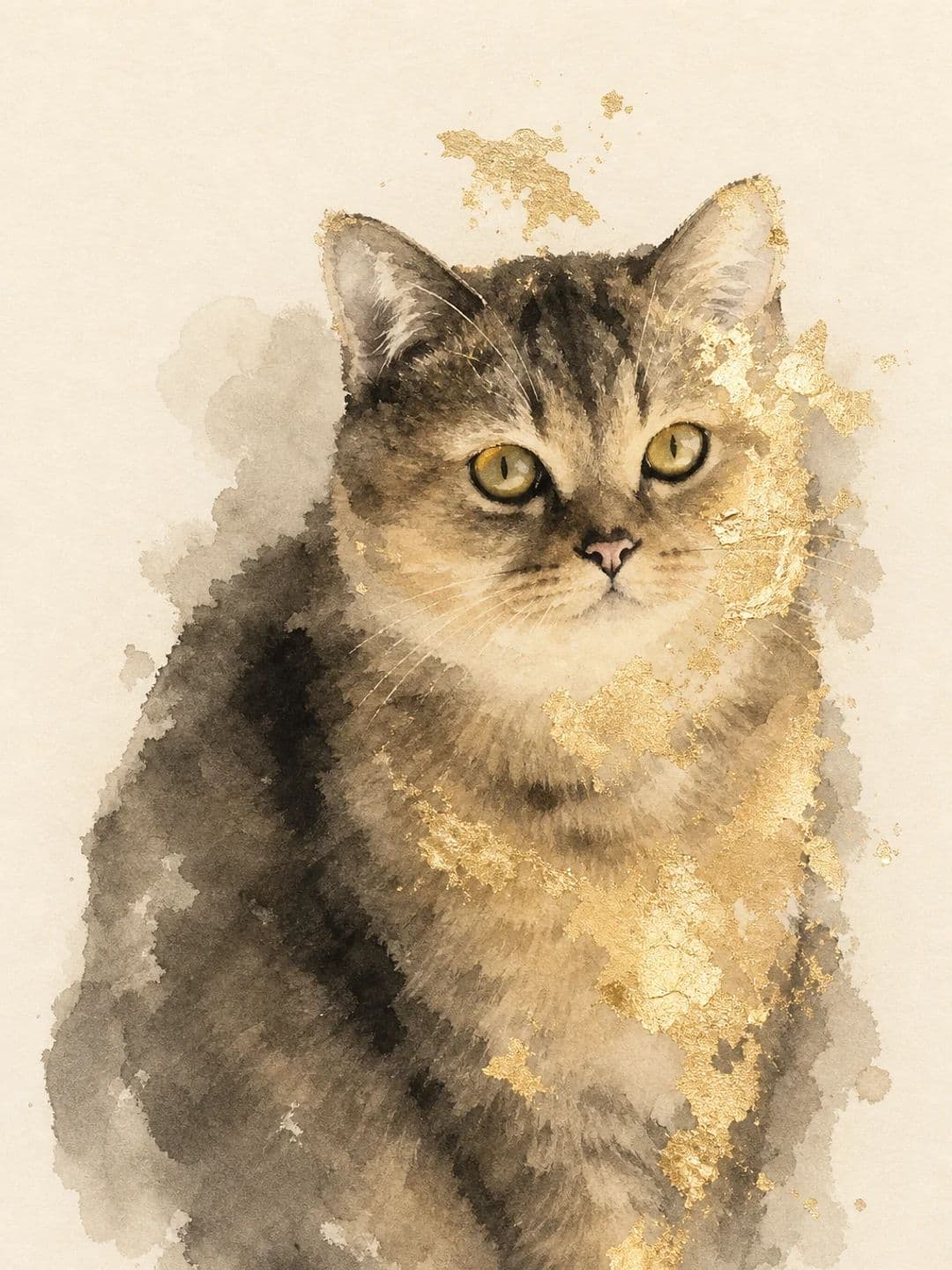
The Cocker calls for a style that can paint fabric: the feathering on the ears is the subject, not the background. Photograph in three-quarters, so that one ear hangs at full length and the light falls through it.