The breed gallery
Sphynx
The Sphynx — the hairless cat in common parlance — is the youngest and most talked-about breed in this survey: a cat without a coat, with skin like warm suede and a character that seems to convert all the warmth it gains into affection.
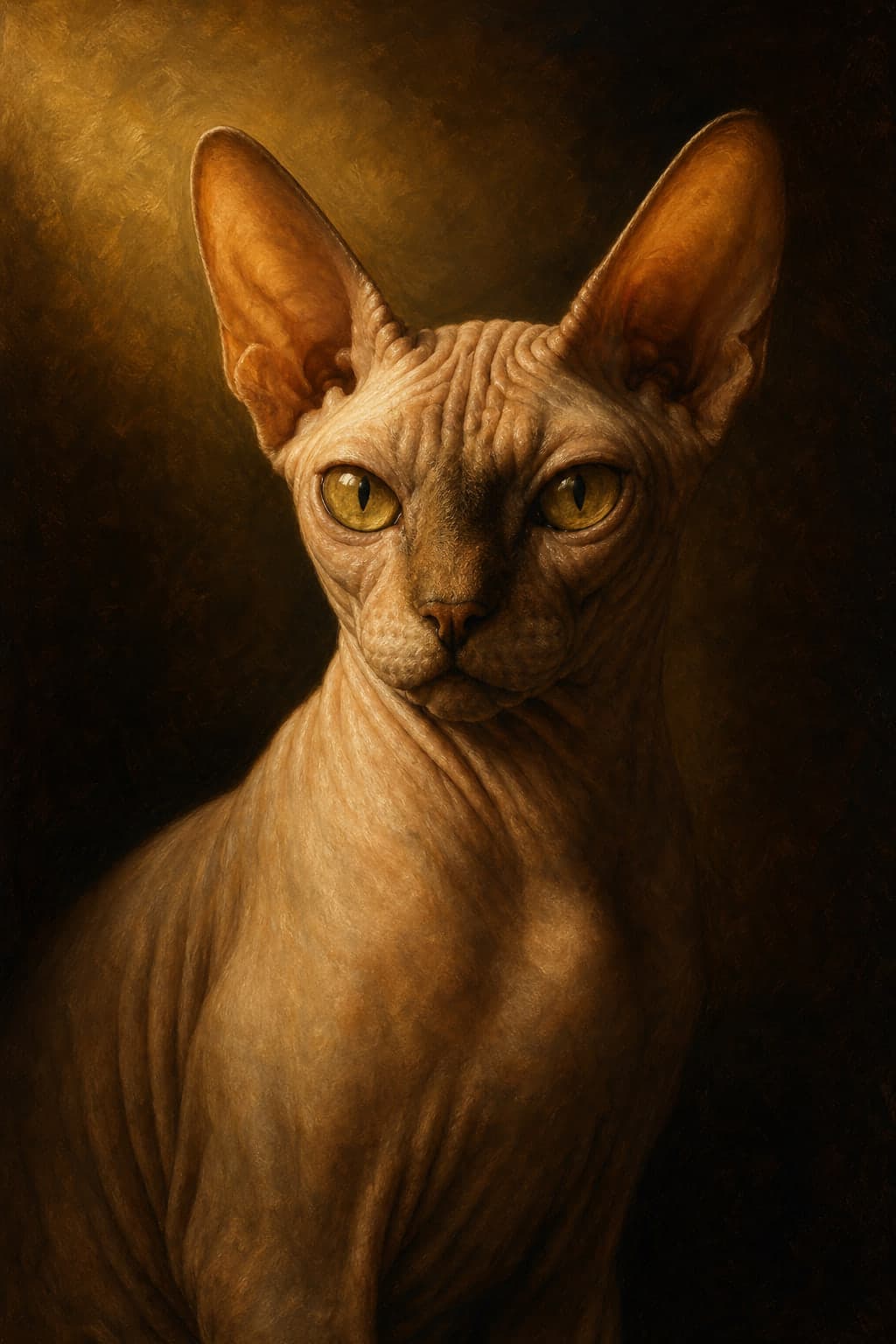
For a portraitist the Sphynx is a sculpture that moves: without a coat, only form remains — muscle, fold and ear.

- Origin
- Canada, 1966 — a natural mutation, then bred on
- Coat
- all but none: a fine down; the skin feels warm and suede-like
- Weight
- roughly 3.5 to 5 kilos
- Life expectancy
- roughly 9 to 15 years
- Character
- energetic, clownish, pronouncedly affectionate — a seeker of warmth
Character
Whoever seeks warmth seeks company: the Sphynx sits on your lap, under the blanket and, at a pinch, in a sleeve. The breed is playful to the point of the clownish, intelligent and loudly present — a cat that enters a room the way others take to a stage.
Being alone the breed tolerates poorly; a second cat or an owner who works from home is no needless luxury.
Appearance and skin
A Sphynx is not entirely bald: a fine down covers the skin, which feels like warmed suede. Every colour and marking a coat would carry shows up as pigment on the skin — a tabby without hair remains a tabby.
With the Sphynx the cat itself is the artwork; the coat was only in the way.
The large ears, the lemon-shaped eyes and the folds around the shoulders and forehead give the breed its unmistakable, sculptural head.
Care
No coat does not mean no upkeep: the skin produces sebum that would normally draw into a coat, so regular washing or wiping is part of the routine, as is cleaning the ears. And the Sphynx is sensitive to cold and to sun alike — a windowsill in July is not a given.
History
In 1966 a hairless kitten was born in Toronto, Prune — a natural mutation of the kind that had occurred before, but now the beginning of a breeding programme. With later Canadian and American foundlings the basis was laid for the breed that has been recognised worldwide since the 1990s.
The portrait
Your Sphynx as an art portrait
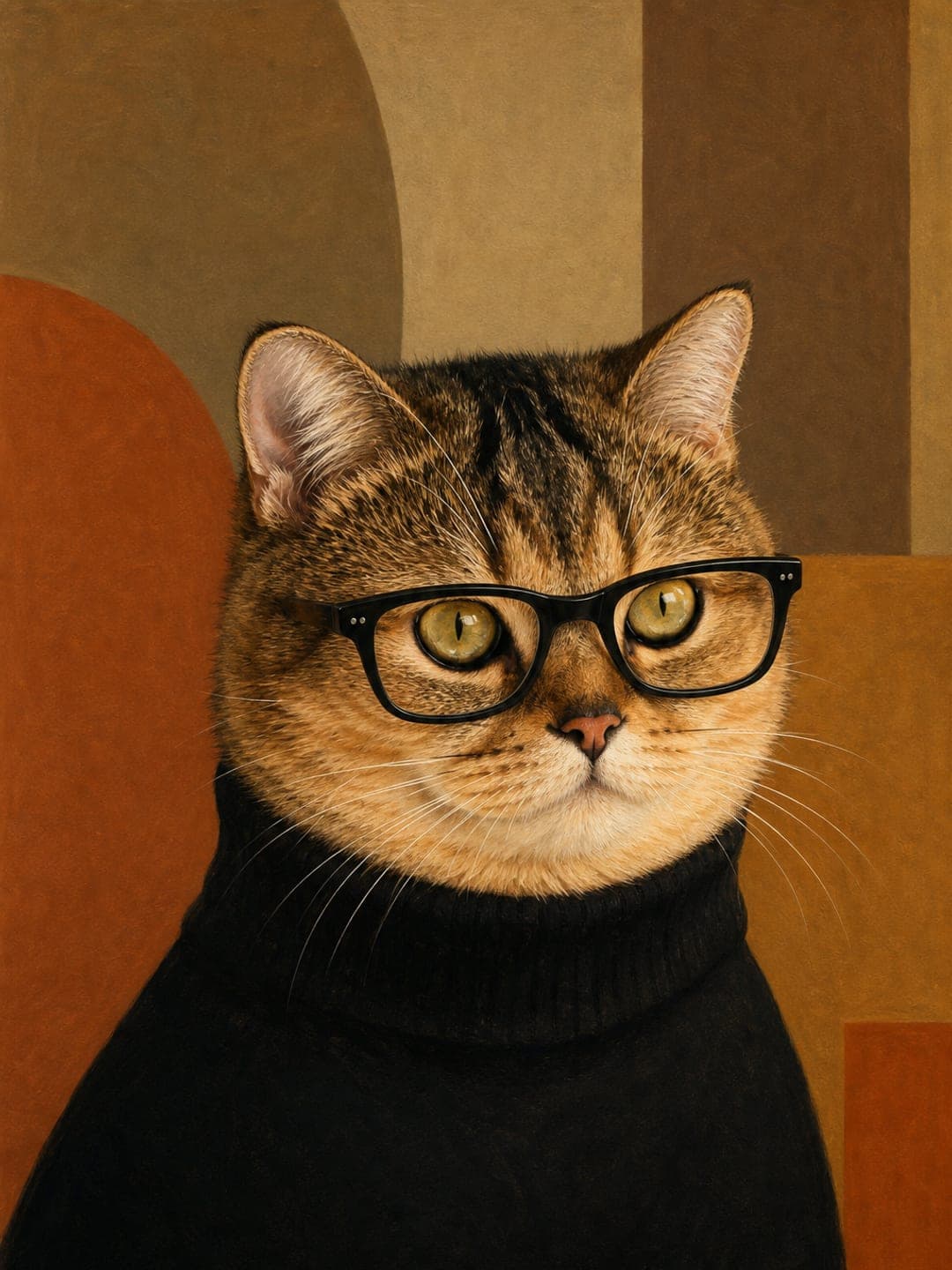
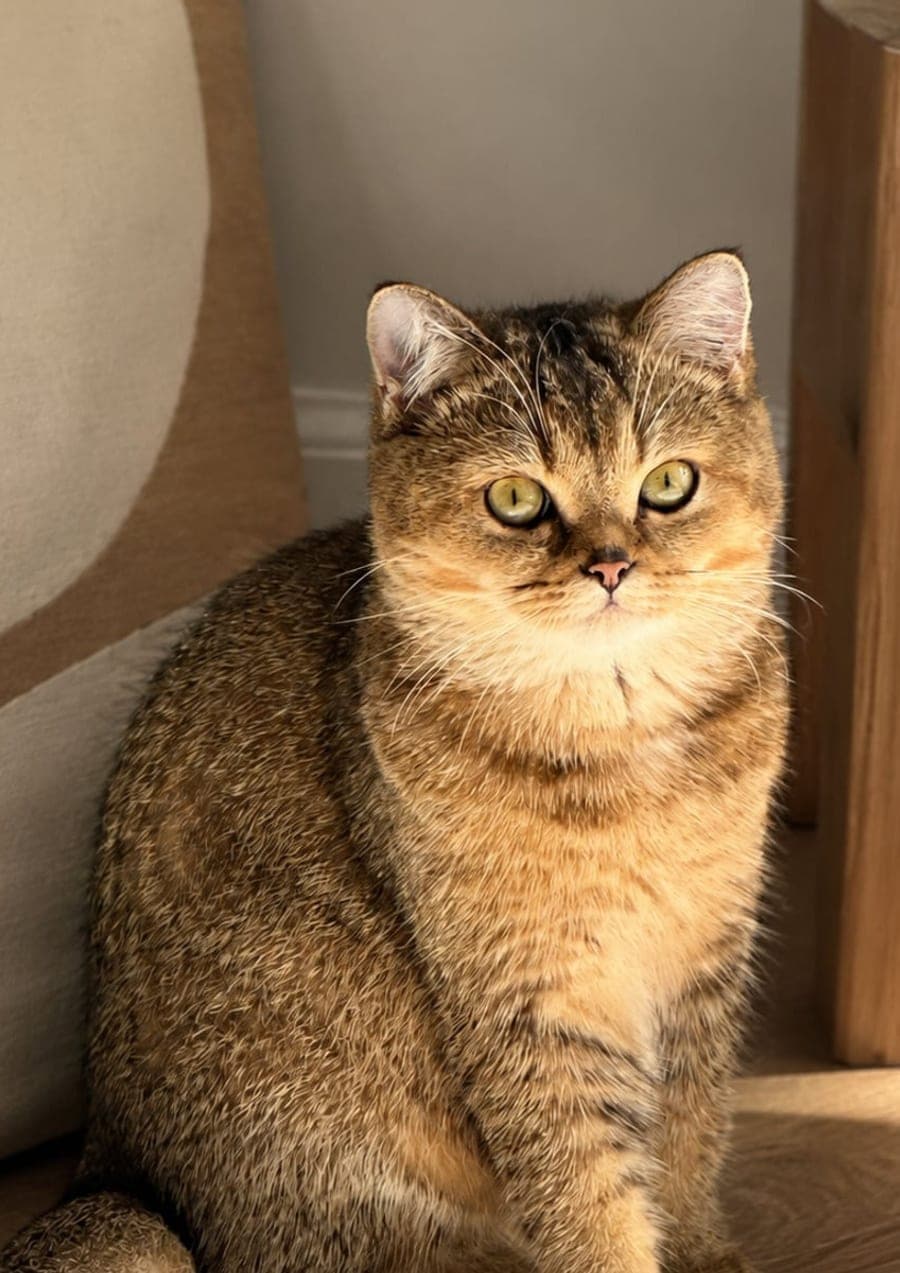
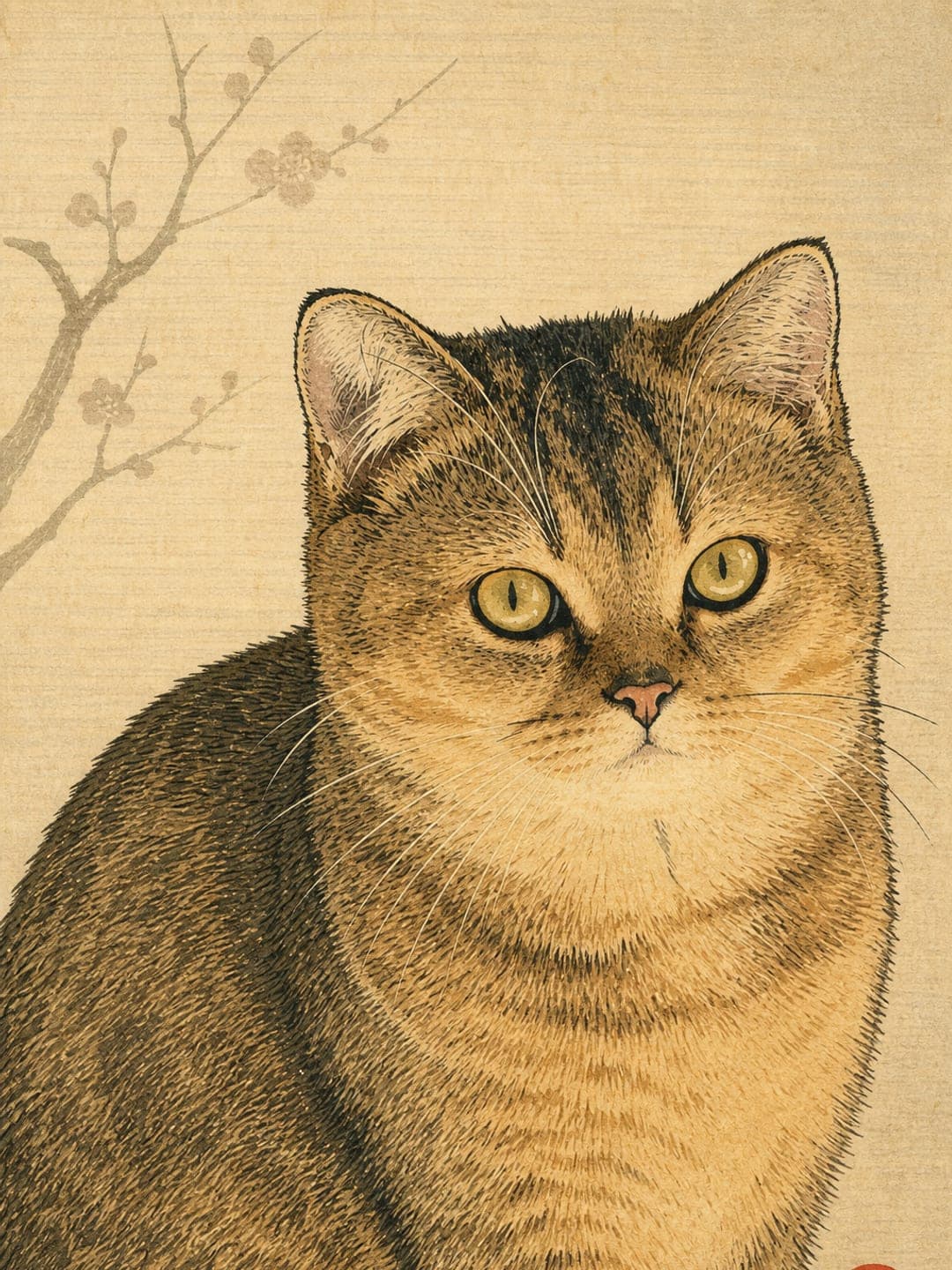
No breed gains as much from an art portrait as the Sphynx: the sculptural form calls for line work, woodblock printing and modernist planes. Photograph in soft raking light — the folds do the rest.