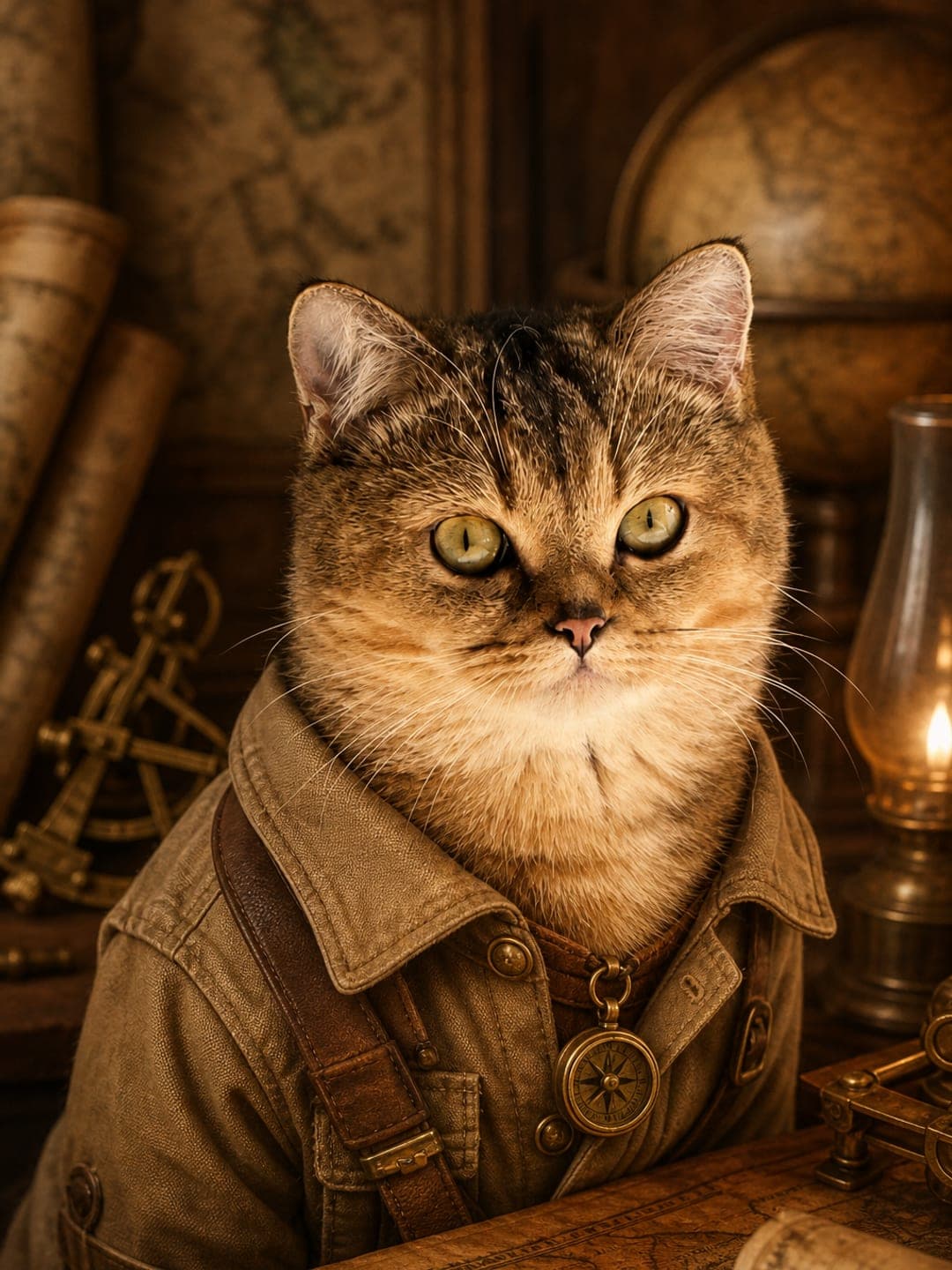
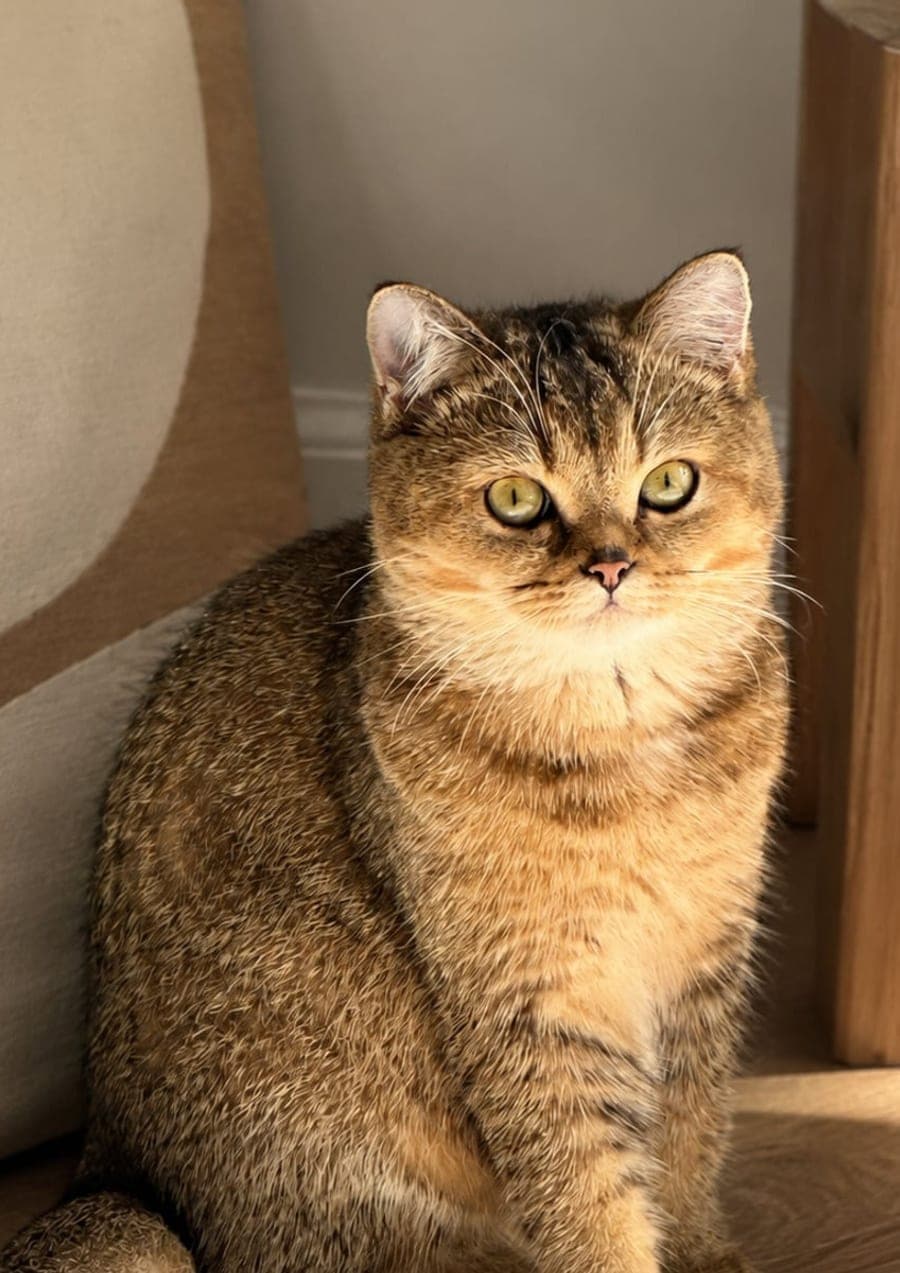
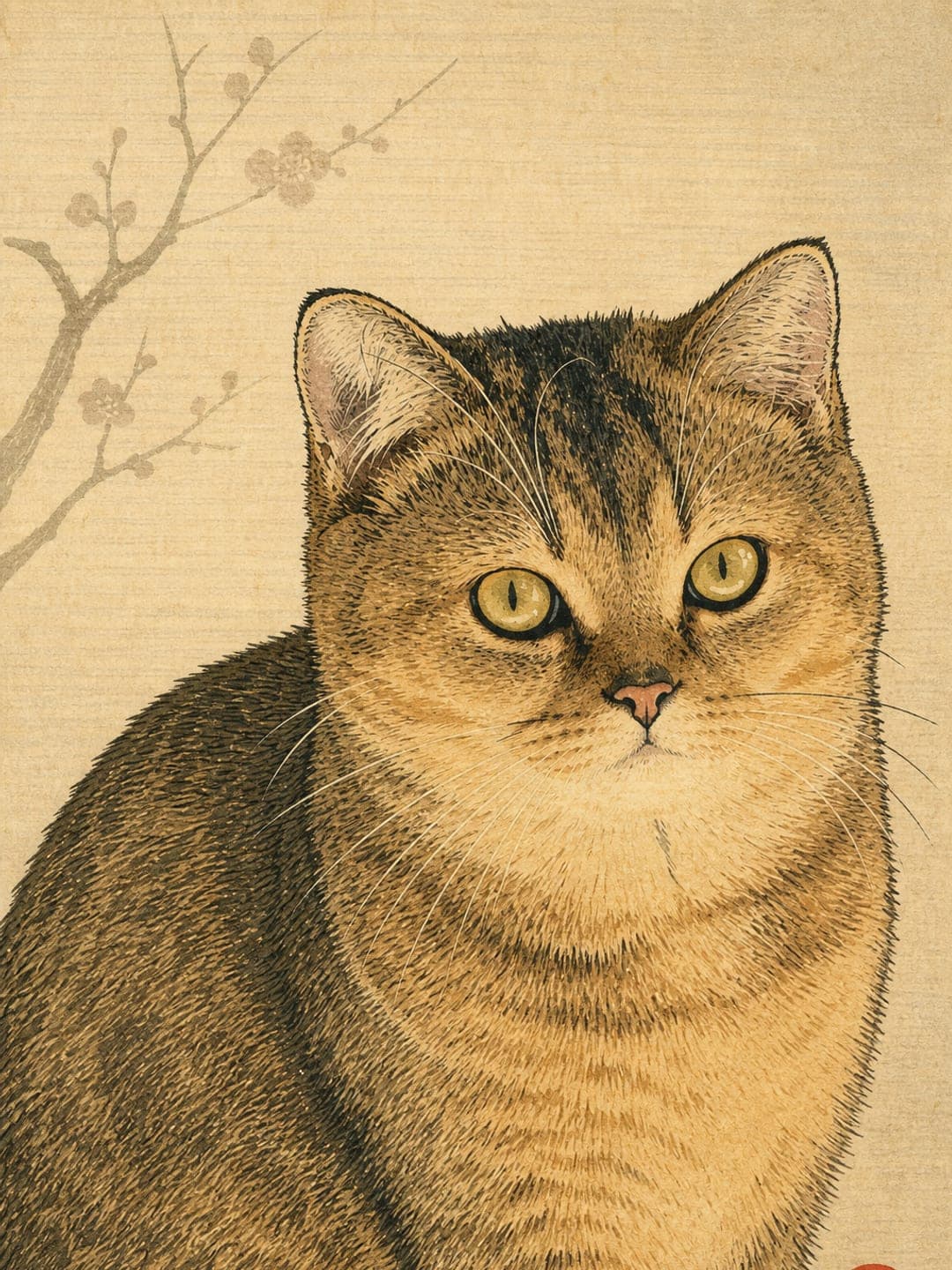
The breed gallery
Bengal
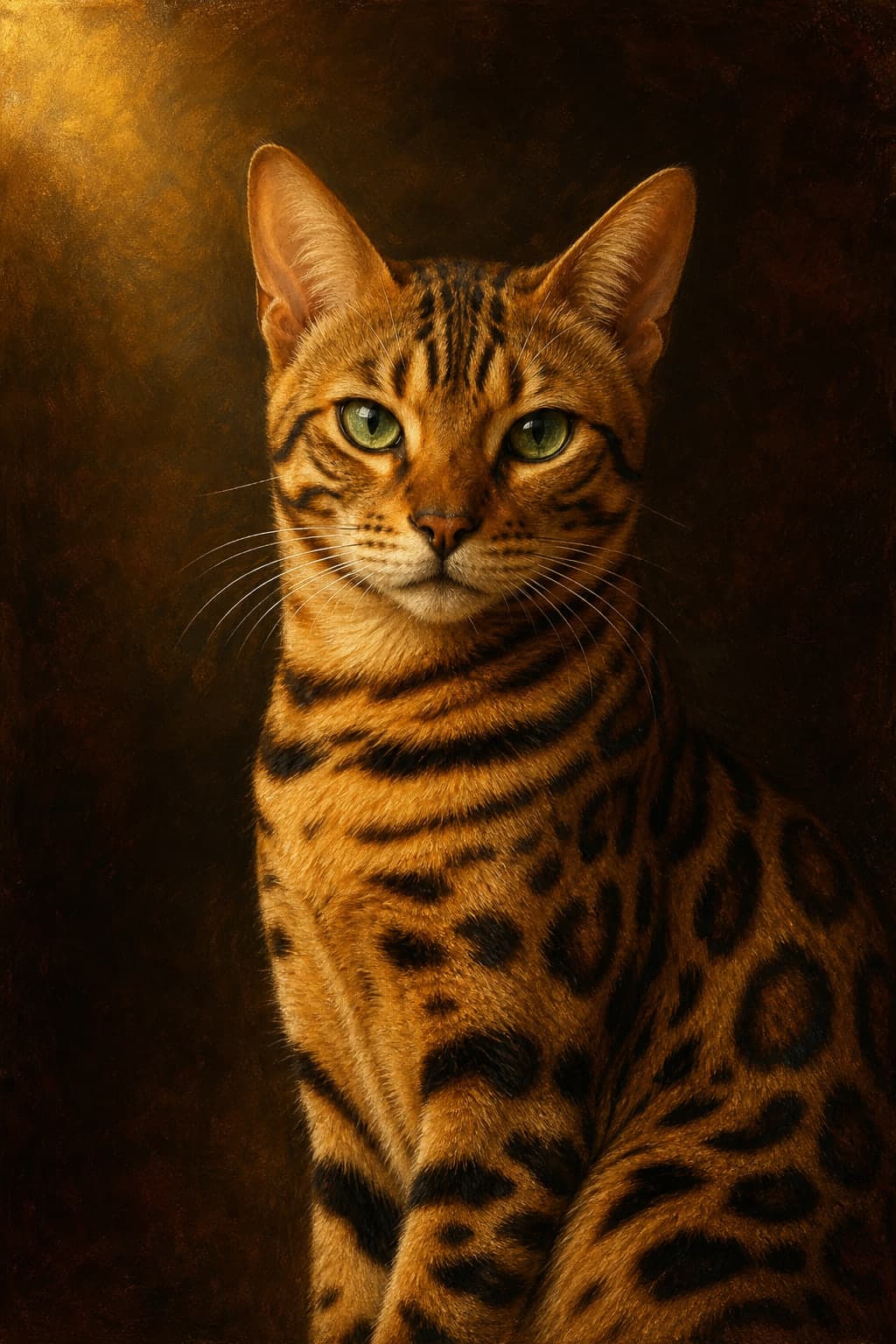
No cat wears its ancestry so visibly as the Bengal. The breed arose in the United States from a cross between the Asian leopard cat and the domestic cat — a 1960s experiment that grew into one of the most popular breeds in the world.
At the workbench the Bengal is a rewarding and a demanding sitter both: the rosettes call for precision, the gaze calls for respect. Anyone who keeps one knows why.

- Origin
- United States, 1963 — Asian leopard cat × domestic cat
- Coat
- short and dense, with rosettes, spots or a marbled pattern; often with a golden sheen
- Weight
- roughly 4 to 7 kilos
- Life expectancy
- roughly 12 to 16 years
- Character
- energetic, intelligent, enterprising — a cat that asks for occupation
Character
The Bengal is no windowsill cat. The breed is pronouncedly active and intelligent: it learns to open doors, fetches objects and — rare among cats — often loves water. A dripping tap is no nuisance but an attraction.
That energy asks something in return. A Bengal without climbing routes, play sessions and company invents its own entertainment, and that rarely aligns with the wishes of the interior. Anyone with time and space gets in return an affectionate, almost dog-like housemate.
Appearance and coat
The coat is the calling card: short, dense and marked with rosettes or marbling in brown, silver or snow tones. Many Bengals also carry a fine golden sheen across the coat — known in breeding as “glitter” — that lights up in raking light as though the cat had been powdered.
A Bengal draws itself; the portraitist need only do the drawing justice.
The body is muscular and low-slung, the head relatively small with round, alert eyes. In motion it is a predator in pocket format; at rest, a sculpture.
Care
The short coat asks little: a weekly brushing will do. The mind asks more — food puzzles, climbing options and set play sessions are no luxury for this breed but maintenance.
History
In 1963 the American breeder Jean Mill crossed an Asian leopard cat with a domestic cat, aiming to keep the look of the wild cat within a domestic temperament. Only generations later was the breed stable; since then the Bengal has conquered the world at speed.
The portrait
Your Bengal as an art portrait
A Bengal’s rosettes are a gift to any style that loves marking: graphic lines and subdued light let the pattern speak without shouting it down. One sharp photograph at eye level is enough — the marking does the rest.